


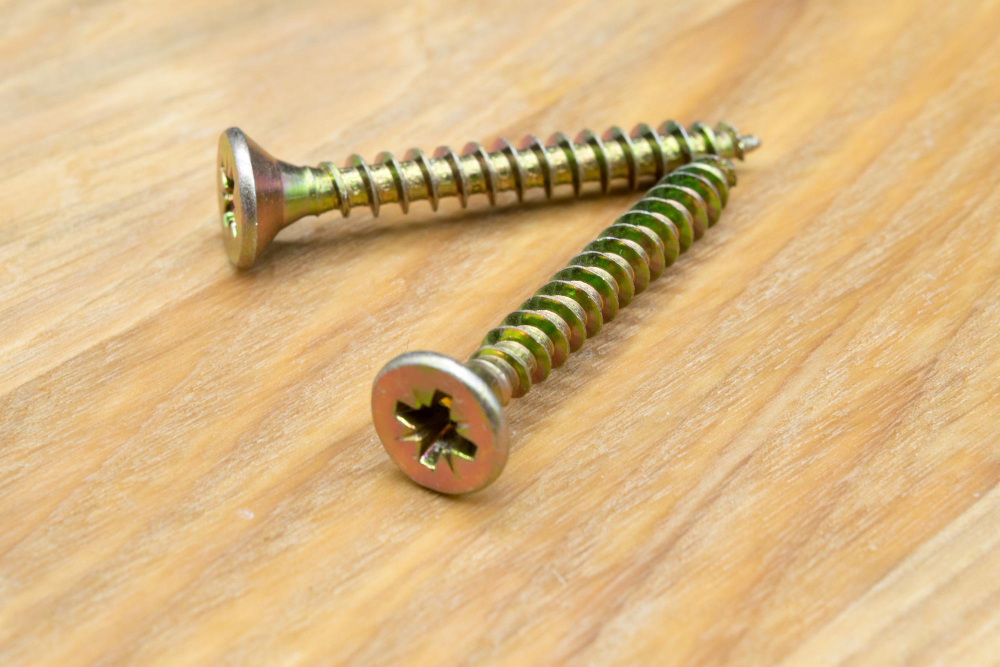
Grub Screw Types: Features, Uses, and Key Differences
There's a small but critical fastener holding together more machines, motors, and mechanical assemblies than most people ever notice. It has no protruding head, sits completely flush (or below) the surface, and does its job entirely out of sight. That's the grub screw, and getting the type wrong can mean the difference between a secure assembly and one that works loose under load.
The challenge is that "grub screw" isn't a single product. There are several distinct point types, each designed for a specific job. Choosing based on size alone, without considering the point geometry and the application it's suited for, is one of the most common mistakes in mechanical assembly. This guide breaks down each type clearly so you know exactly which one you need.
What Is a Grub Screw?
A grub screw is a fully threaded, headless fastener designed to secure one component against another, typically a gear, pulley, or collar against a shaft, by applying direct pressure through its tip rather than clamping from above. Because it has no protruding head, it can be driven completely into a threaded hole using an internal drive (usually a hex socket), allowing the assembly to sit flush or have the screw sit recessed below the surface. This makes grub screws the fastener of choice in mechanical assemblies where space is tight, rotation is involved, or any external protrusion would create a hazard.
Why Are Different Grub Screw Types Used?
The point geometry of a grub screw determines how it contacts the mating surface and, as a result, how much grip it provides, whether it damages the shaft, and how well it holds under vibration or axial load. Not every application calls for the same approach, which is why there are several point types to choose from. Here's what each one is designed to do.
Cup Point Grub Screw
The cup point grub screw is the most widely used type across general mechanical and industrial applications. Its tip has a small, circular hollow that bites into the shaft surface when tightened, creating a positive, semi-permanent grip that resists both rotation and axial movement. Because it deforms the shaft slightly on contact, it's ideal where the screw may need to be removed and repositioned, as it leaves a cleaner mark than harder-biting alternatives.
Cone Point Grub Screw
The cone point grub screw features a sharp, conical tip that is designed to penetrate the shaft surface under tightening force. This creates a very strong, concentrated grip that's particularly effective for permanent or semi-permanent assemblies where the joint will not need to be frequently disassembled. It's commonly used in hardened or tough shaft materials where a biting point is necessary to prevent slip under high torque or heavy axial loads.
Dog Point Grub Screw
The dog point grub screw has a short, flat-ended cylindrical projection at its tip, which fits into a corresponding hole or slot machined into the shaft. Rather than relying on surface penetration, it locates the component positively, preventing rotation and axial movement without damaging the shaft at all. This makes it the right choice for applications involving frequent disassembly and reassembly, since neither the screw nor the shaft surface is worn by the process.
Flat Point Grub Screw
The flat point grub screw has a completely flat, broad tip that distributes the clamping force evenly across a larger surface area when tightened against the shaft. It produces minimal damage to the shaft and is used in applications where the shaft or mating surface must be preserved, or where the assembly is adjusted frequently. It's also a common choice for locking adjustment mechanisms or soft materials where a pointed tip would cause unacceptable deformation.
Oval Point Grub Screw
An oval point grub screw has a smoothly rounded tip that makes light contact with the shaft surface without biting into it deeply. It's a good choice for applications requiring regular adjustment, where shaft marking needs to be minimised while still providing enough friction to hold the component in position. The oval tip distributes stress more evenly than a cone point and is gentler on softer shaft materials.
Hex Socket
The hex socket refers to the internal drive recess found in the head end of a grub screw, designed to accept a hex key (Allen key) for tightening and loosening. It's the most common drive type across all grub screw point profiles and allows the screw to be fully recessed into the threaded hole. The hex socket drive provides good torque transfer in confined spaces, which is precisely the environment where headless grub screws are most often used.
Comparison of Grub Screw Types
Every point type has a distinct strength profile. The table below makes it easier to match the right type to your application at a glance.
| Point Type | Tip Geometry | Shaft Contact | Shaft Damage | Best For |
| Cup Point | Circular hollow rim | Biting/indenting | Moderate | General use, removable assemblies |
| Cone Point | Sharp conical tip | Deep penetration | High | Permanent or high-torque joints |
| Dog Point | Flat cylindrical stub | Locating in a hole/slot | None | Frequent disassembly, positive location |
| Flat Point | Broad flat face | Surface pressure | Minimal | Soft materials, adjustable mechanisms |
| Oval Point | Rounded dome | Light surface contact | Very low | Fine adjustments, low shaft damage |
| Hex Socket | Internal hex recess (drive type) | N/A | N/A | Standard drive for all recessed applications |
How to Choose the Right Grub Screw
Start with the application requirements. If the joint needs to be disassembled and reassembled regularly, a dog point grub screw or flat point grub screw will protect the shaft from repeated damage. For a permanent, high-torque connection on a tough shaft, a cone point grub screw provides the strongest bite. The operating environment matters too, because vibration calls for a point type that locks positively rather than relying on friction alone.
Also consider the shaft material and acceptable surface damage. Soft shafts (aluminium, brass, or mild steel) will be scored or deformed by aggressive point types, which may compromise future use of that shaft section. A cup point grub screw offers a sensible middle ground for most general applications, providing a reasonable grip with moderate surface impact and good performance across a range of shaft materials.
Finding a Reliable Grub Screw Supplier
When sourcing grub screws for industrial or construction use, quality consistency matters more than unit price. A fastener that's slightly out of tolerance, incorrectly heat-treated, or with a soft hex socket will fail under load or strip during installation. Look for a supplier who can demonstrate adherence to dimensional standards, offers a full range of point types and materials, and can fulfill orders at volume without substituting specifications.
Genuine Enterprises is a committed grub screw supplier in India serving the construction and mechanical hardware sector. We stock a comprehensive range of grub screw types and sizes, and we operate with a clear focus on supply consistency, quality, and efficiency. Easy and laid-back is not how we work.
Conclusion
Grub screws are small, but the point type you choose has a real impact on joint performance, shaft condition, and service life. A cup point grub screw handles most general-purpose jobs. A cone point grub screw is for permanent, high-load joints. A dog point grub screw is the right call when repeated disassembly is on the cards. And a flat point grub screw protects soft or frequently adjusted surfaces.
Getting the selection right from the start means fewer failures, less rework, and assemblies that perform the way they're supposed to. If you're working through a specification or need to source a range of grub screw types for a project, Genuine Enterprises has the inventory and the knowledge to help.
FAQs
1. What are the different types of grub screws?
The main types are cup point, cone point, dog point, flat point, and oval point grub screws. Each has a different tip geometry that determines how it contacts the shaft and how much grip it provides. They also vary by drive type, with hex socket being the most common internal drive format.
2. Which grub screw type provides the strongest grip?
The cone point grub screw provides the strongest grip because its sharp tip penetrates the shaft surface deeply under tightening force. This creates a very firm mechanical lock, making it most suitable for permanent or semi-permanent assemblies under high torque or axial load. The trade-off is greater shaft damage compared to other point types.
3. When should I use a dog point grub screw?
Use a dog point grub screw when the component needs to be removed and refitted regularly, and when preserving the shaft surface is important. The flat-ended stub locates into a machined hole or slot in the shaft, providing a positive mechanical lock without scoring or deforming the shaft. It's common in precision instruments and assemblies where alignment needs to be repeatable.
4. What is the difference between cup point and cone point grub screws?
A cup point grub screw has a hollow circular rim that bites into the shaft to a moderate depth, giving a secure but not permanent grip. A cone point grub screw has a sharp, pointed tip that penetrates deeper and more aggressively into the shaft. Cup point is suited to removable assemblies with moderate load, while cone point is better for permanent joints under high stress.
5.Where can I find a reliable grub screw supplier in India?
Genuine Enterprises is a grub screw supplier in India stocking a full range of point types, drive styles, materials, and sizes for construction and industrial applications.
Categories
Related Blogs
Leave a Comment
Your email address will not be published. Required fields are marked *