


What Is a Gantry Crane? Uses, Working Principle & Applications
A gantry crane is a lifting machine with a horizontal beam, called the bridge, that rests on its own freestanding legs. A hoist and trolley run along that beam to lift and move heavy loads. Because the legs carry the weight, the crane does not depend on a building's walls or columns for support.
That self-supporting frame is what makes a gantry crane so flexible. It can work in a yard, beside a building, or inside a workshop where no overhead runway exists. A traditional overhead crane, by contrast, hangs its rails from the building structure itself, and we will look at how the two compare below.
What Is a Gantry Crane?
A gantry crane is a type of overhead crane built with a single or double girder, supported by freestanding legs. Those legs move on wheels, along rails or on a track, so the whole crane can shift position.
The beam carries a trolley and hoist, which handle the actual lifting and sideways movement. Gantry cranes are usually considered when there is a reason not to install an overhead runway system. They are common outdoors, and they are also used under an existing overhead crane.
How Is a Gantry Crane Different From an Overhead Crane?
The main difference is what holds the crane up. An overhead crane runs on rails fixed to a building's columns or ceiling structure, so the building does the supporting. A gantry crane stands on its own legs, so it needs no runway beams overhead and can be set up where a building structure is missing or unsuitable.
People often use the two terms for the same thing, and the line does blur. Some gantry cranes carry a hoist on a movable beam, and some overhead cranes hang from a freestanding frame. The semi-gantry design is a good example, since it combines features of both. The real choice usually comes down to capacity and strength on one side, and flexibility and simpler installation on the other.
What Makes a Gantry Crane Useful?
A gantry crane is useful because it brings lifting capacity to places a building-mounted crane cannot reach. It works in open yards, on construction sites, and in workshops without a runway structure. Depending on the type, it can also be rolled to another spot, moved along rails, or placed over a work area for as long as the job needs. This is why gantry cranes are used across so many sectors, from heavy fabrication to light maintenance.
How Does a Gantry Crane Work?
A gantry crane works through three movements, each driven by its own mechanism. One raises and lowers the load, one moves it across the bridge, and one moves the whole crane along its path. Together they let an operator place a load almost anywhere under the span.
Let's go through each movement.
Hoisting: Raising and Lowering the Load
The hoist is mounted on the trolley, and a motor or lifting mechanism drives it. That motion turns a drum, which winds a wire rope or chain in or out. The hook at the end rises or lowers, and the load moves straight up or down.
Trolley Travel: Moving the Load Across the Bridge
The trolley carries the hoist and travels along the bridge girder. As it moves, the load shifts from one side of the span to the other. This movement controls the sideways position of the load.
Gantry Travel: Moving the Crane Along the Runway
In gantry travel, wheels or a travel mechanism at the base of the legs move the entire crane. On a fixed crane, they roll along ground rails or an engineered travel path. The crane moves, and the suspended load goes with it.
How the Three Movements Work Together
Hoisting sets the height, trolley travel sets the position across the span, and gantry travel sets the position along the path. An operator can use them one after another or combine them. That gives full control of where a load is picked up and where it is put down.
What Are the Main Components of a Gantry Crane?
A gantry crane is made of a few key parts, and each plays a clear role in carrying and moving the load. The frame handles the weight, the trolley and hoist handle the lifting, and the controls keep everything in check. Knowing these parts also helps when you compare different models.
Here is a closer look at each one.
Bridge Girder
The bridge girder is the main horizontal beam that spans the legs and carries the trolley and hoist. A gantry crane can have one girder or two. Single-girder designs are simpler, while double-girder designs suit heavier loads and offer more lifting height.
Supporting Legs
The legs are what define a gantry structure, since they hold the bridge up without any help from a building. They transfer the load down to the ground or the travel system. Their design depends on the crane's capacity and span.
Trolley and Hoist
The trolley moves along the bridge to position the load across the span. The hoist, fitted to the trolley, does the vertical lifting. Together they handle most of the work during a lift.
End Trucks, Wheels and Runway
End trucks sit at the base of the legs and hold the wheels. On fixed cranes, the wheels run on ground rails, while portable and rubber-tyred cranes use casters or tyres instead. The setup you choose decides how and where the crane can travel.
Hook, Controls and Safety Systems
The hook holds the load, and an operator controls the crane through a pendant, a radio remote, or a cabin. Brakes hold the load in place and stop movement when needed. Limit switches and other safety devices keep the hook and trolley within their safe range.
What Are the Different Types of Gantry Cranes?
Gantry cranes come in several forms, and the right one depends on where the crane will work and what it will lift. The types below differ in how the legs are supported and how the crane moves. Some are fixed to rails, while others are built to be rolled from place to place.
Full Gantry Crane
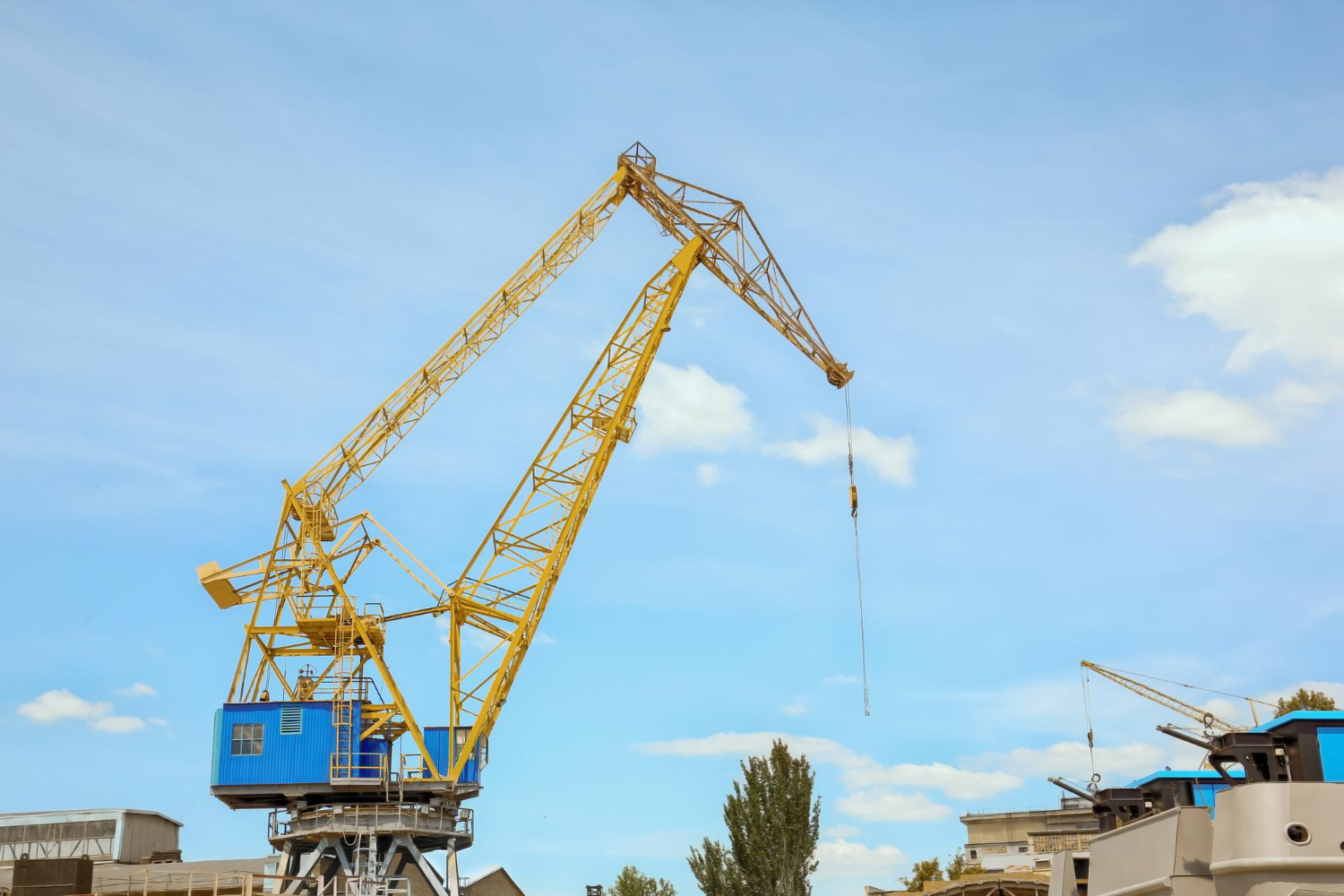
A full gantry crane has two legs that are supported at ground level, usually on rails embedded in the floor or laid on the ground. It is the most popular configuration. You will find it in outdoor yards and heavy fabrication areas.
Semi-Gantry Crane
A semi-gantry crane has one side supported by legs on the ground, while the other side rides on an elevated runway fixed to a wall or building structure. This design suits spaces where one side has an obstruction or limited room. It is often used in facilities that want to save floor space.
Cantilever Gantry Crane
A cantilever gantry crane has a bridge that extends beyond its supporting legs. That extension is useful where loads need to be reached outside the main runway or span. It is often used where the crane has to work over or past an obstruction.
Portable Gantry Crane
A portable gantry crane is lighter and runs on casters or wheels, so it can be rolled where it is needed. It suits temporary jobs and maintenance work. It is usually built for lighter loads, and it needs a flat, firm surface when you move it.
Rail-Mounted and Rubber-Tyred Gantry Cranes
Rail-mounted gantry cranes travel along fixed rails, which keeps their path precise and predictable. Rubber-tyred gantry cranes move on tyres and need no tracks, so they are more mobile around a yard. Both types are common in container yards and logistics terminals.
Single-Girder vs Double-Girder Gantry Cranes
Girder count describes how the bridge is designed. It is a separate classification from full, semi, or portable, so the two do not compete with each other. A full gantry crane, for example, can have either a single girder or a double girder.
What Is a Gantry Crane Used For?
Gantry cranes turn up wherever heavy loads need to be lifted and moved without a building-mounted runway. Here is how the main sectors put them to work.
Manufacturing and Industrial Material Handling
Gantry cranes move raw material, machine parts and finished goods around production areas. They also help with loading and unloading heavy items in yards.
Construction and Infrastructure
On building sites and infrastructure projects, they lift beams, precast sections and other heavy components. Their freestanding design suits sites with no existing structure to support a crane.
Ports, Terminals and Logistics
Rubber-tyred and rail-mounted gantry cranes move containers around terminals and storage yards. They stack and retrieve loads in a limited space.
Shipyards and Marine Applications
These cranes lift hull sections, engines, and other heavy parts during building and repair. Special designs, such as boat lift gantries, are also used to handle vessels.
Warehouses, Workshops and Maintenance
Smaller and portable gantry cranes help with engine removal, machine servicing and moving heavy stock. Many are easy to roll in, use, and put away.
Gantry Crane Safety and Maintenance
Safe use starts with respecting the crane's rated capacity and keeping loads within it. In the US, OSHA's overhead and gantry crane rule (29 CFR 1910.179) covers operation, inspection, maintenance and load handling. It asks operators to test the brakes whenever a load close to the rated capacity is lifted, and to test the upper hoist limit switch at the start of each shift under no load. Loads should never be carried over people.
Regular inspection is just as important as careful operation. That means checking wire ropes or chains for wear, twisting or damage, and looking at electrical parts such as contactors, limit switches and pushbutton stations for signs of deterioration. On rail-mounted and rubber-tyred cranes, it also helps to check the wheels, tracks and travel surface. Keep records of inspections and repairs, and follow the manufacturer's guidance and the rules that apply in your region.
Conclusion
A gantry crane lifts and moves heavy loads using a bridge supported by its own legs. It works through hoisting, trolley travel, and gantry travel, and it comes in forms such as full, semi, cantilever, portable, rail-mounted, and rubber-tyred. Girder count is a separate way of classifying the bridge.
Gantry cranes suit manufacturing, construction, ports, shipyards, and workshops, as long as they are chosen well and inspected regularly. At Genuine Enterprises, we supply hardware components used in construction, and we are glad to help with the hardware requirements for your next project.
FAQs
1. What is a gantry crane?
A gantry crane is a lifting machine with a bridge supported by its own freestanding legs. A trolley and hoist run along the bridge to lift and move loads.
2. How does a gantry crane work?
It combines hoisting, trolley travel along the bridge, and gantry travel along its path. Together, these let the operator place a load almost anywhere under the span.
3. What is a gantry crane used for?
It is used to lift and move heavy loads in manufacturing, construction, ports, shipyards, and workshops. It suits places where a building-mounted runway is not available.
4. What are the main types of gantry cranes?
The main types are full, semi, cantilever, portable, rail-mounted, and rubber-tyred gantry cranes. Girder count (single or double) is a separate classification.
5. What is the difference between a gantry crane and an overhead crane?
A gantry crane stands on its own legs, while an overhead crane runs on rails fixed to a building structure. The two terms are often used loosely, and some designs combine both.
6. Can gantry cranes be used indoors?
Yes, many are used in workshops, warehouses, and factories. Portable and semi-gantry cranes are especially common indoors.
7. Can a gantry crane be moved?
Portable gantry cranes can be rolled on casters or wheels, and rubber-tyred cranes move on tyres. Rail-mounted cranes move only along their tracks.
8. What is the difference between a single-girder and double-girder gantry crane?
A single-girder crane has one bridge beam and is simpler, suiting lighter loads. A double-girder crane has two beams and is generally chosen for heavier loads and greater lifting height.
Categories
Related Blogs



Leave a Comment
Your email address will not be published. Required fields are marked *