


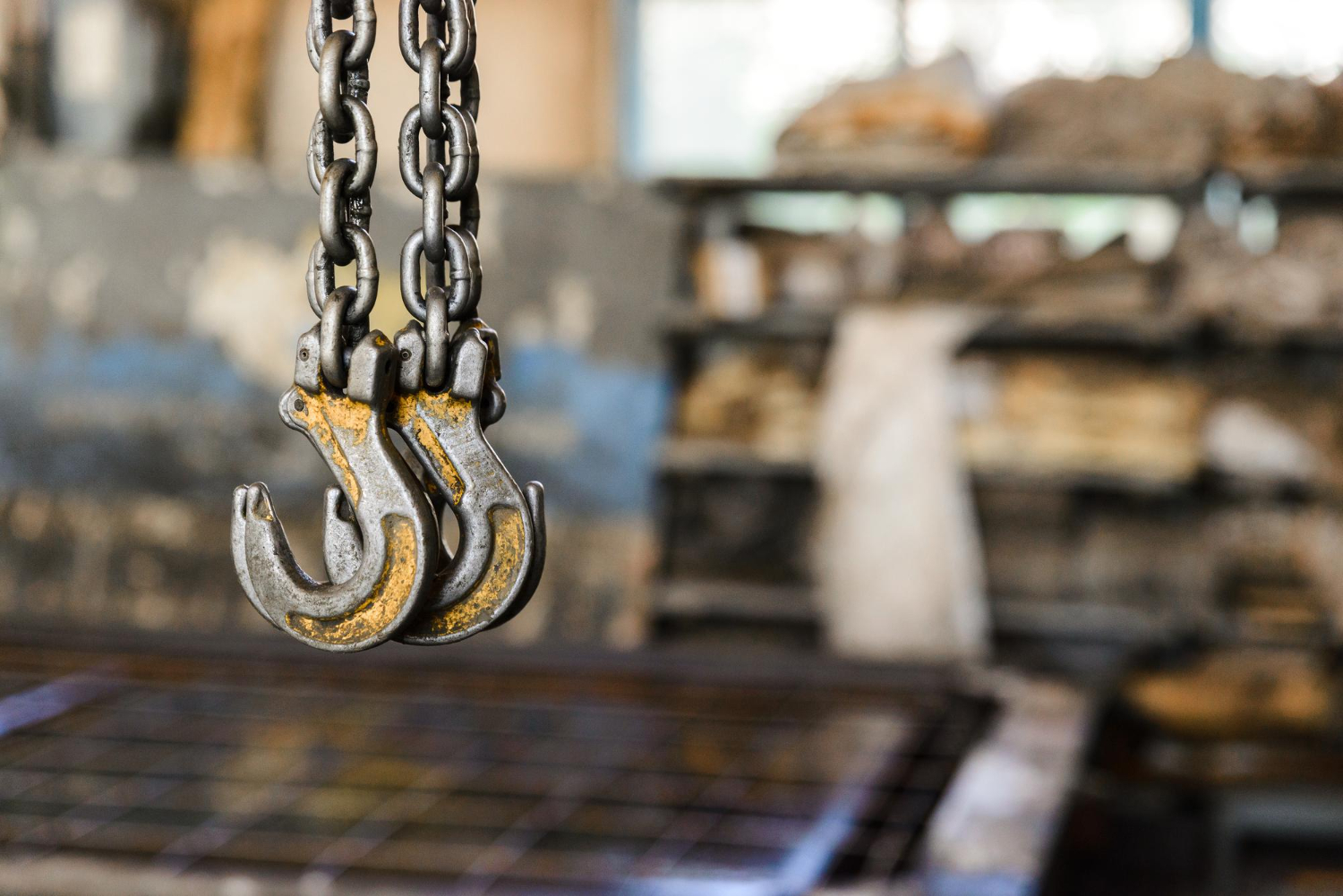
Types of Chain Pulley Blocks: Features, Applications & Selection Guide
Every construction site, warehouse, and fabrication floor has one thing in common: things need to be lifted, and lifted safely. Chain pulley blocks are one of the most widely used tools for doing exactly that, yet the wrong type on the wrong job is a problem that shows up faster than most people expect. Efficiency drops, safety margins shrink, and downtime follows.
The good news is that choosing right isn't complicated once you understand what's available and why each type exists. Whether you're outfitting a new facility, replacing ageing equipment, or specifying gear for a one-off project, this guide covers everything you need to make a confident decision on chain pulley block selection.
What Is a Chain Pulley Block?
A chain pulley block is a mechanical lifting device that uses a system of interlocking chains, gears, and sprockets to multiply the operator's input force, allowing heavy loads to be raised, lowered, or suspended with significantly less effort than the load would otherwise require.
At its core, it works through mechanical advantage: the gear reduction inside the housing means a relatively small pull on the hand chain translates into a much larger lifting force on the load chain. This makes it one of the most versatile and widely deployed pieces of lifting equipment across industrial, commercial, and construction environments.
Why Understanding Chain Pulley Block Types Matters
Selecting a chain pulley block without understanding the differences between available types is like choosing a vehicle without knowing whether you need a truck or a sedan. The mechanism, power source, and design of each type directly affect how safely and efficiently it performs in your specific environment. A mismatch between the equipment and the application doesn't just slow things down, it introduces real risk.
The right type also affects long-term costs. An electric chain block in a high-frequency production environment saves significant operator effort and time. A manual chain hoist on a remote construction site avoids the complications of power supply. Getting this decision right from the start means lower maintenance costs, better productivity, and a safer workplace over the equipment's entire service life.
Types of Chain Pulley Blocks
Not all chain pulley blocks work the same way or suit the same applications. The right choice depends on load, environment, frequency of use, and available power supply. Here's a clear breakdown of the three main types of chain pulley block you'll encounter.
Manual Chain Hoist
A manual chain hoist is a hand-operated lifting device where the operator pulls a looped hand chain to engage the internal gear mechanism and raise or lower the load chain. It requires no electricity, making it the go-to option for remote sites, outdoor environments, and locations where a power source is unavailable or unreliable. Manual hoists are straightforward to maintain, easy to transport, and well suited to lifting operations that aren't performed at high frequency.
Electric Chain Block
An electric chain block uses a motor powered by mains electricity to drive the lifting mechanism, removing the physical effort of hand-chain operation entirely. It's designed for environments where loads are lifted frequently, quickly, or at heights that make manual operation impractical, such as production lines, warehouses, and fabrication facilities. The motor-driven mechanism allows for consistent lifting speeds and reduces operator fatigue significantly in high-volume operations.
Lever Block Chain Hoist
A lever block chain hoist is operated by a short ratchet lever rather than a long looped hand chain, giving the operator precise, incremental control over load movement in any direction, including horizontal pulling and tensioning. It's particularly useful in confined spaces, at angles, or when the load needs to be inched into an exact position rather than simply raised vertically. The compact form factor makes it a common choice in maintenance work, rigging, and situations where space around the load is limited.
Comparison of Different Chain Pulley Block Types
Choosing between these three types becomes much clearer when you look at the key performance factors side by side. Each type has a distinct profile across load capacity, speed, ease of operation, cost, and maintenance needs.
| Feature | Manual Chain Hoist | Electric Chain Block | Lever Block Chain Hoist |
| Load Capacity | Typically 0.5T to 20T | Typically 0.5T to 50T+ | Typically 0.75T to 9T |
| Lifting Speed | Slow (operator-dependent) | Fast and consistent | Slow and precise |
| Ease of Operation | Moderate physical effort | Minimal effort | Moderate; very controlled |
| Cost | Low to moderate | Higher (equipment + power) | Moderate |
| Maintenance | Simple, fewer components | More complex (motor, electrics) | Simple, mechanical only |
| Power Required | None | Mains electricity | None |
| Best Environment | Remote/outdoor sites | Factories, warehouses | Confined spaces, rigging |
Applications of Chain Pulley Blocks
Chain pulley blocks are used wherever loads need to be lifted, positioned, or suspended safely. The range of industries that depend on them is broad, which reflects just how versatile this class of equipment really is. Here's where each application typically calls for them.
Construction
On construction sites, manual chain hoists and electric chain blocks are used to lift steel beams, precast elements, and heavy materials into position at height. Their ability to work with crane hooks or overhead beams makes them central to structural assembly work.
Manufacturing
In manufacturing facilities, electric chain blocks handle repetitive lifting on production and assembly lines where speed and consistency are essential. High-frequency operation across shifts makes motor-driven equipment far more efficient than manual alternatives.
Warehouses
Warehouses rely on chain pulley blocks for loading, unloading, and positioning heavy pallets, equipment, and racking components. Electric chain blocks mounted on overhead beam systems allow goods to be moved quickly across a facility with minimal manual effort.
Workshops
In fabrication workshops, lever block chain hoists and manual hoists are used to position parts for welding, machining, or assembly. Their portability and ease of rigging make them a flexible solution in environments where the lifting point changes from job to job.
Maintenance Projects
Maintenance teams frequently reach for lever block chain hoists when working in tight spaces around machinery, pipework, or structural components. The precise control a lever block provides is particularly valuable when a load needs to be held, inched, or positioned carefully rather than simply lifted and dropped.
How to Choose the Right Chain Pulley Block
Start with the load. Know the maximum weight you'll be lifting and apply the appropriate safety factor, generally a minimum of 20% above your peak load. Then factor in lifting height, because some applications require extended chain drops that not all equipment is configured to handle out of the box. If the lifting cycle will be repeated many times per shift, the difference in operator effort between a manual chain hoist and an electric one becomes a productivity and safety consideration, not just a comfort one.
The operating environment shapes the decision as much as the load does. A site with no reliable power supply rules out electric equipment. A workshop full of overhead beams favours a hoist that can be rigged quickly to different points. A maintenance team working inside plant machinery needs the compactness of a lever block chain hoist. Think through a typical day's lifting tasks before finalising the specification, and it becomes much easier to narrow down the right type.
Finding a Reliable Chain Pulley Block Supplier
The quality of a chain pulley block matters most when the load is at height. Equipment that doesn't meet safety standards, is built to loose tolerances, or lacks proper load ratings is a liability rather than an asset. When evaluating suppliers, look for products that carry relevant certifications, come with clearly marked Safe Working Loads, and are backed by after-sales support that includes spares availability and technical guidance.
At Genuine Enterprises, we take supply seriously. We are committed to continuously improving our services and strengthening our supply capabilities, because easy and laid-back is not how we operate. Being a committed chain pulley block supplier in India, we stock manual hoists, electric chain blocks, and lever block chain hoists across a range of capacities to meet the demands of construction, fabrication, and industrial projects.
Conclusion
Understanding the types of chain pulley blocks available is the foundation of a safe and efficient lifting operation. Each type is built for a different set of conditions, and the right match between equipment and application directly affects both productivity and safety on the job.
Take the time to assess your load requirements, your site environment, and how frequently the equipment will be used. These three factors alone will narrow your selection considerably. And when you're ready to source, work with a supplier who understands the equipment and can stand behind what they sell.
FAQs
1. What are the different types of chain pulley blocks?
The three main types of chain pulley block are the manual chain hoist, the electric chain block, and the lever block chain hoist. Each differs in its power source, lifting speed, load capacity range, and the environments it's best suited to. Manual hoists are portable and need no power; electric blocks handle high-frequency and high-capacity work; lever blocks excel in confined or angled lifting situations.
2. What is the difference between a manual chain hoist and an electric chain block?
A manual chain hoist is operated by pulling a hand chain and requires no electricity, making it well suited for remote or outdoor use. An electric chain block uses a motor to drive the lift mechanism, offering faster operation, higher capacities, and far less physical effort from the operator. The trade-off is that electric models require a power supply and are more complex to maintain.
3. When should I use a lever block chain hoist?
Use a lever block chain hoist when you need precise, incremental control over load movement, particularly in confined spaces or at non-vertical angles. It's also the right choice for maintenance work where loads need to be held or inched into position carefully. The compact ratchet lever gives operators better control than a hand chain in situations where space is restricted.
4. Which chain pulley block is best for heavy-duty lifting?
For the heaviest lifting requirements, an electric chain block is generally the most capable option, with industrial models rated for several tens of tonnes. For heavy loads in locations without power, a high-capacity manual chain hoist is the alternative. Always verify the Safe Working Load rating of the equipment before use and ensure the overhead structure can handle the combined weight of the load and the hoist itself.
5. Where can I find a reliable chain pulley block supplier in India?
Genuine Enterprises is a chain pulley block supplier in India stocking a full range of manual hoists, electric chain blocks, and lever block chain hoists for construction and industrial applications. With a consistent focus on supply quality and customer service, we're equipped to support both project-specific and ongoing supply requirements.
Categories
Related Blogs




Leave a Comment
Your email address will not be published. Required fields are marked *